Domestic Labor and Invisible Cooks
If I am going to trace the rise of the celebrity chef, I have to start with a question that sits underneath it all, and it is a simple one, but it keeps coming up the more I read and write about this: who actually gets to be seen?
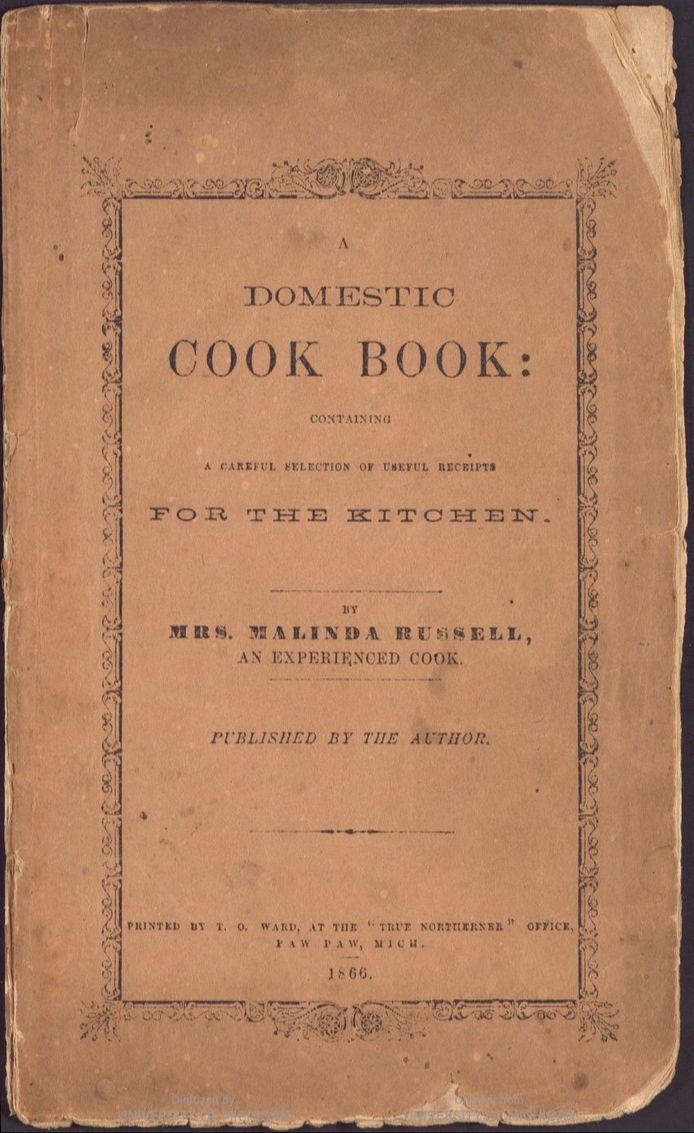
I keep coming back to Malinda Russell and to the cooks written about in Recipes for Respect, because their work lives right in the middle of that question. These were people who knew what they were doing in the kitchen, who brought knowledge, experience, and skill, and who shaped how food was prepared and served every single day. And still, most of that moved through the world quietly, without recognition attached to it in any lasting way.
Russell’s cookbook gives us a small opening into that world. In the beginning, she explains why she wrote it, and it is direct and honest in a way that she is not trying to wrap it up in a package with a pretty pink bow. She had lost what she earned, she was older, and she needed a way to support herself, so she turned to what she knew and put it into a form that could be shared and sold. “Being compelled to leave the South on account of my Union principles, in the time of the Rebellion, and having been robbed of all my hard-earned wages which I had saved, and as I am now advanced in years, with no other means of support than my own labor, I have put out this book with the intention of benefiting the public as well as myself.” (Russell, 4) The more I sit with that, the more I see it as survival. It reads like someone making sure her knowledge did not disappear with her.
When we place her work alongside what is discussed in Recipes for Respect, a pattern emerges. Cookbooks and household manuals weren’t just collections of recipes. They became one of the few places where domestic labor could be shaped into something visible and legible. Zafar explains, “It contemplates cookbooks, hotelkeepers’ guides, novels, and memoirs as revelatory avenues for Black authors’ deployment of foodways to elevate their social status, attain civil rights, and present a dignified professional self to the public.” (Zafar, 2) There is a kind of care in how things are written, how recipes are organized, and how instructions are explained, and it feels intentional. We can sense that the writing is documenting food as a way of thinking, working, and knowing.
That text is important, especially when we think about who these books were written for. There is a level of awareness in the writing, like they knew that being taken seriously meant more than just knowing how to cook. It meant showing that knowledge in a way that the people in power would actually recognize at the time. So instead of announcing it, they let it come through in how things were organized, how clearly they explained things, and how precise everything felt. I could see the intelligence in it as I read through the book.
However, it is hard not to notice how much never made it into print. A lot of what shaped American food culture lived in kitchens where nothing was written down, where knowledge moved from person to person, and was then lost in translation.
So when I think about the rise of the chef as a public figure, I cannot just move past this part. Before there were titles, recognition, or any kind of platform, cooks were working in systems that didn’t really make space for them to be seen. And when that shift finally does happen, when chefs start stepping forward, and people begin to notice them, it’s all sitting on top of this. After reading Recipes for Respect, I walked away with a deeper appreciation for where all of this really begins.