Media, Voice, and the Modern Culinary Persona
Now we are getting into something deeper, where the chef moves from being a product into something that looks a lot more like a lifestyle. And what better person to step into that space than Martha Stewart? What she built did not center around a restaurant, and it did not stay confined to teaching people how to cook. It moved through the home in a much broader way, with cooking sitting alongside design, entertaining, hosting, and the space's overall feeling. Her authority came from the way she curated that entire experience and made it feel accessible. Through Martha Stewart Living, that approach became something people could bring into their own homes, with food, design, and entertaining all presented as part of the same experience.
What makes her role here even more interesting is the continued evolution of identity. Her collaboration with Snoop Dogg introduced her to a completely different audience and shifted how she was perceived culturally. That evolution becomes even more visible in a clip featuring Martha Stewart and Snoop Dogg shared on YouTube, where their dynamic leans into humor, ease, and an unexpected chemistry that feels far removed from the more controlled image she built earlier. (Martha Stewart and Snoop Dogg’s Best Moments). This connection with Snoop added a layer of humor, looseness, and unexpected chemistry that made her feel relevant in a new way, someone who could move between spaces and still hold her own.
What we see here with Martha Stewart is the chef's role continuing to evolve from a lifestyle to a true voice. We witness a lived experience with the two of them bantering back and forth as they instruct us on cooking. Anthony Bourdain enters this moment in a way that feels different from everything that came before. Martha Stewart’s influence had structure and a carefully constructed sense of order. Bourdain stripped things down and brought forward a kitchen that felt immediate and unfiltered. In Kitchen Confidential, he wrote about the realities of kitchen life with a level of honesty most people outside the industry had never been exposed to. At times, that honesty does not line up with what people expect to hear. He even points out that “In New York City, the days of the downtrodden, underpaid illegal immigrant cook…have largely passed—at least where quality line cooks are concerned” (Bourdain 57). That kind of detail shifts how the kitchen is usually discussed. It reads like someone writing from inside it, where hierarchy, pressure, ego, and exhaustion are just part of how the space operates.
Anthony Bourdain used storytelling to showcase how food became a means of exploring culture, identity, and human connection. Through his writing, global travel, and television work, he sparked a broader conversation that invited people to consider where food comes from, who makes it, and what it represents. He became a voice, someone whose perspective people actually paid attention to, but what made that voice feel grounded was his awareness of how fragile that kind of visibility could be. As he writes in his 2006 book, The Nasty Bits: Collected Varietal Cuts, Usable Trim, Scraps, and Bones, "As a TV chef/guy myself, I have always found it useful to remember that the good times could end at any second, that the next book could tank, that the TV thing could come crashing down with the arrival of the very next ratings book, and that could well end up right back behind the stove, flipping steaks and dunking fries until I keel over from the heat or alcoholism." (Bourdain, 129-130).
Anthony had incredible awareness that sat underneath everything he did. He kept the work connected to the kitchen and expanded the chef's role into something that lived just as much in story and perspective as in the food itself. If that doesn’t speak to the rise of the celebrity chef, I don’t know what does.
When we think about what it means to be a chef now, it is not about a single turning point. It feels like something that was built slowly, piece by piece. The person behind the food comes into focus over time, especially as certain voices are given space and know how to carry it. After that, it is hard to imagine it returning to what it once was.
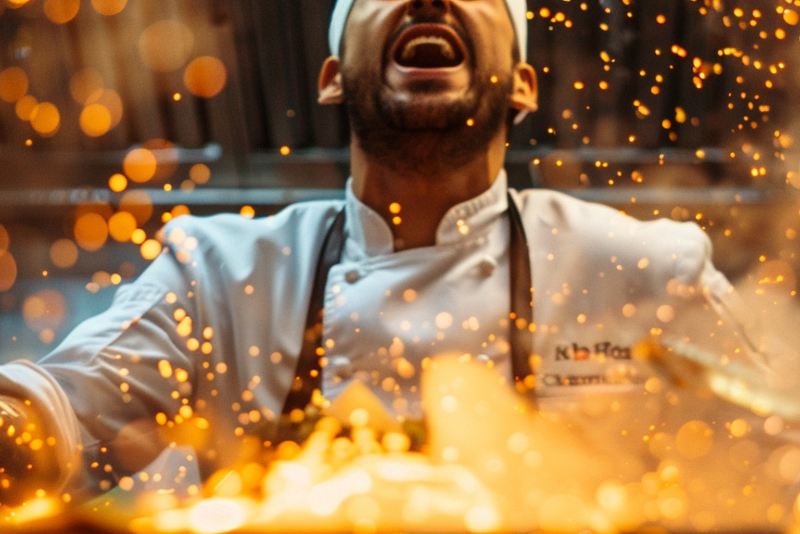
What stays with me is how all of this now exists in the same space, where food, media, and culture run together so easily, it is hard to imagine them as separate things. We can see it clearly in the way chefs show up now, holding a kind of presence that feels familiar in a different way, closer to what we have seen with musicians or athletes, where people know their names, follow what they’re doing, and pay attention to what they say. That level of attention did not just happen on its own. It came from everything that built up around it, the media, the structure, the storytelling, the access, all of it working together to bring the person behind the work forward. Once we see it like that, it’s hard to unsee. The chef has become someone people watch, listen to, and connect with, and that rock-star status extends far beyond the kitchen itself.